
Note
To implement Azure Active Directory using SAML, you must first configure SAML in Microsoft Azure Portal and then configure SAML Authentication in Logpoint. Go to Appendix for details.
Go to Settings >> System Settings from the navigation bar and click Plugins.
Find SAML Authentication and click Manage.
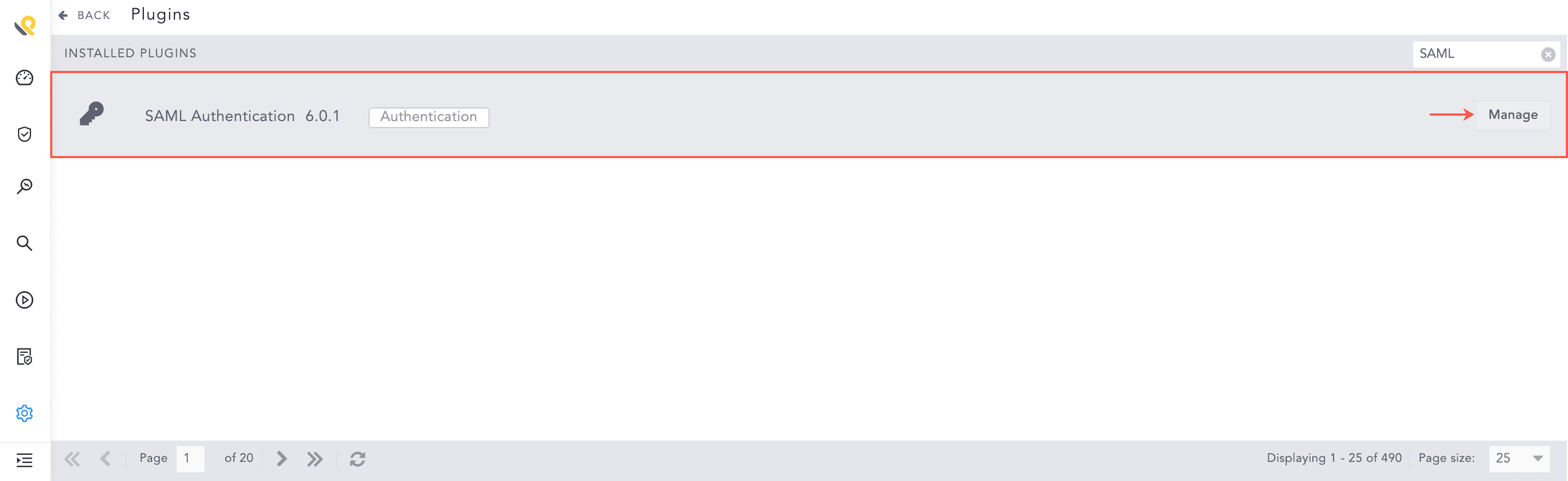
Manage SAML Authentication
Click ADD SERVER.
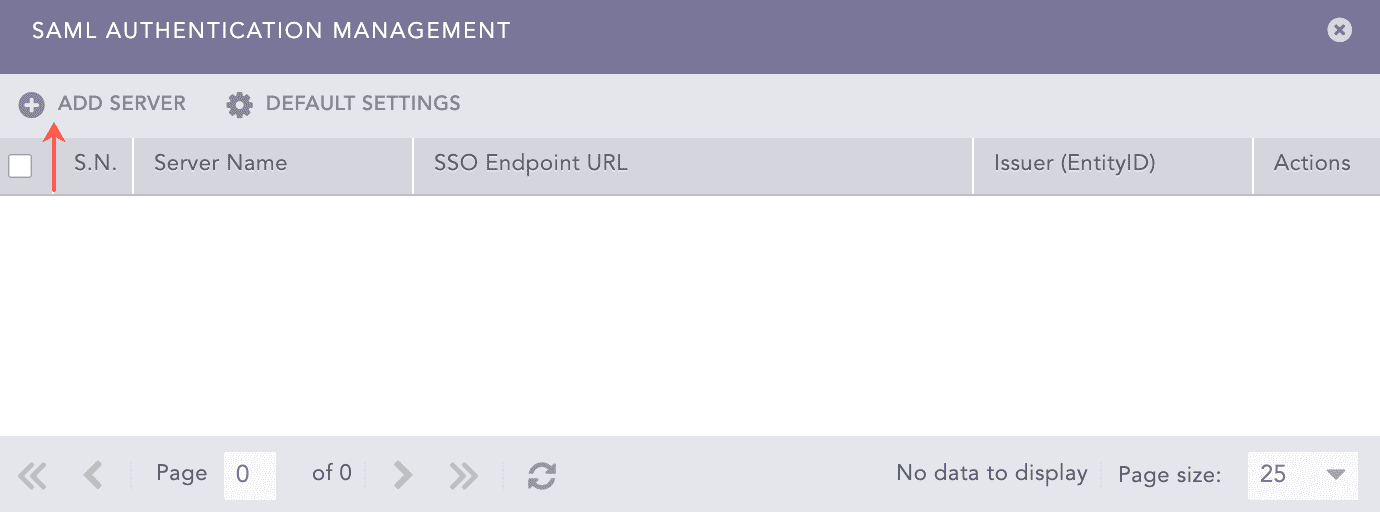
Add SAML Server
Enter a unique Server Name.
In Issuer (EntityID), enter the Logpoint’s IP address.
SAML Authentication generates the ACS (Consumer) URL automatically.
Note
You must add these Issuer (EntityID) and ACS (Consumer) URL in your IdP server. For Shibboleth, you must download the Logpoint metadata file and upload it in its server.
Enter the EntityID. You can find it in your IdP metadata file as entity ID.
Enter the SSO EndPoint URL. You can find it in your IdP metadata file as Location in SingleSignOnService. The SingleSignOnService must be HTTP-POST.
Enter the X.509 Certificate. You can find it in your IdP metadata file as the signing certificate. For Shibboleth, you can find it as the FrontChannel signing certificate.
In Response Username Field, enter the field to extract the username from the SAML response.
In Response Role Field, enter the field to extract the role from the SAML response.
Click Save.
Note
The time zones of the IdP server and Logpoint must be identical.
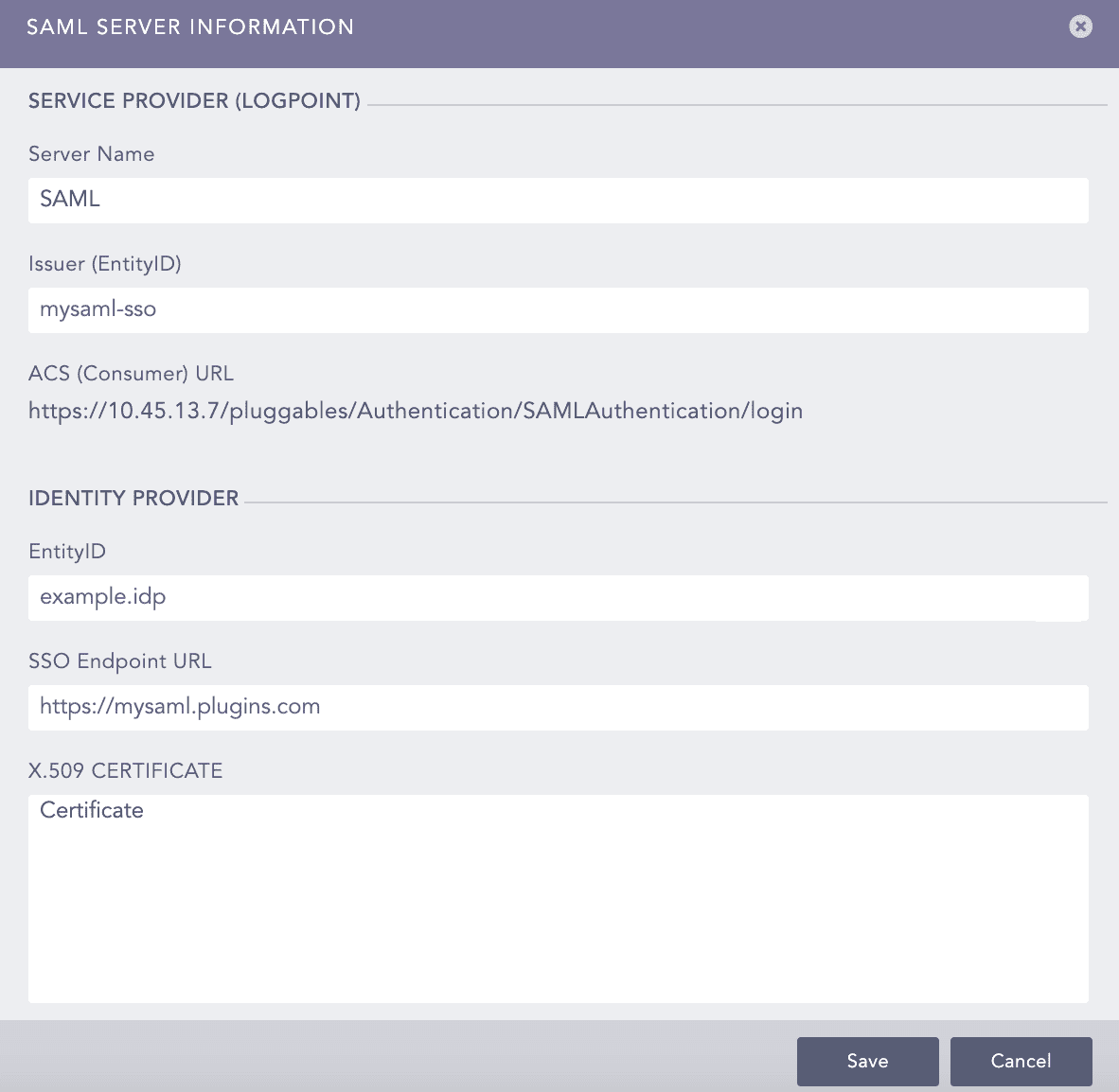
Adding an IdP Server
Click Yes to make SAML authentication as the default authentication. Otherwise, click No.
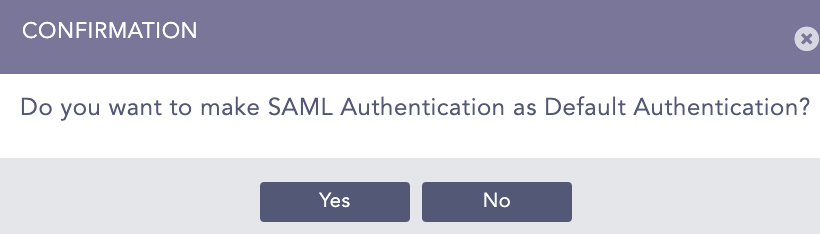
Select Authentication
Note
Once you add an IdP server, Role Mapping is added and Add Server is removed in SAML Authentication management.
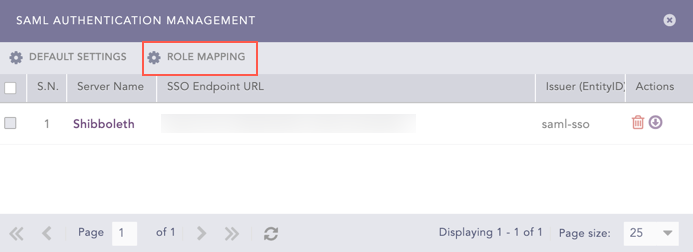
SAML Authentication Management
Go to Settings >> System Settings from the navigation bar and click Plugins.
Find SAML Authentication and click Manage.
Click Default Settings.
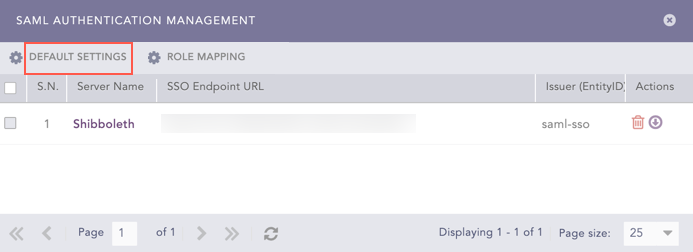
SAML Authentication Management
Select a Logpoint user group as the Default Role. SAML Authentication assigns the user group to the SAML Authentication users whose role attribute are not returned by the IdP server.
Click Save.
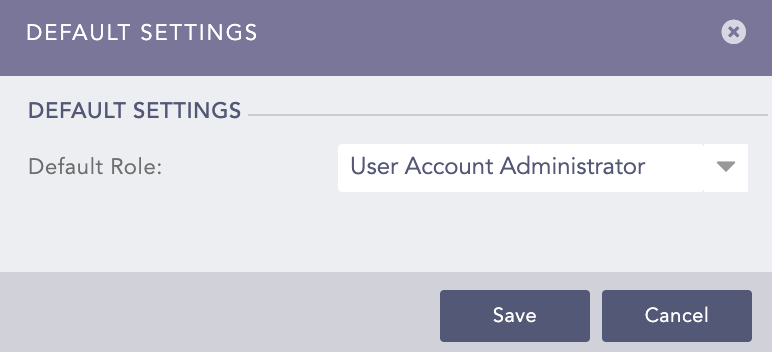
Default Settings
Go to Settings >> System Settings from the navigation bar and click Plugins.
Find SAML Authentication and click Manage.
Click the Download icon from Actions.
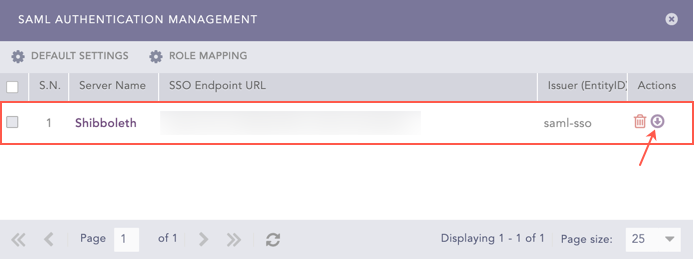
Downloading Logpoint Metadata
You can map a SAML role to a Logpoint user group to grant access permission in Logpoint. A SAML role can be mapped to a single Logpoint user group only. This is mandatory.
To map a SAML role to a Logpoint user group:
Go to Settings >> System Settings from the navigation bar and click Plugins.
Find SAML Authentication and click Manage.
Click Roles Mapping.
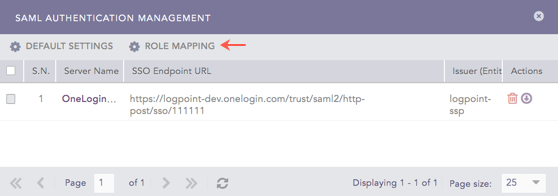
Role Mapping
Enter a SAML Role.
Select a LogPoint User Group for the provided SAML role.
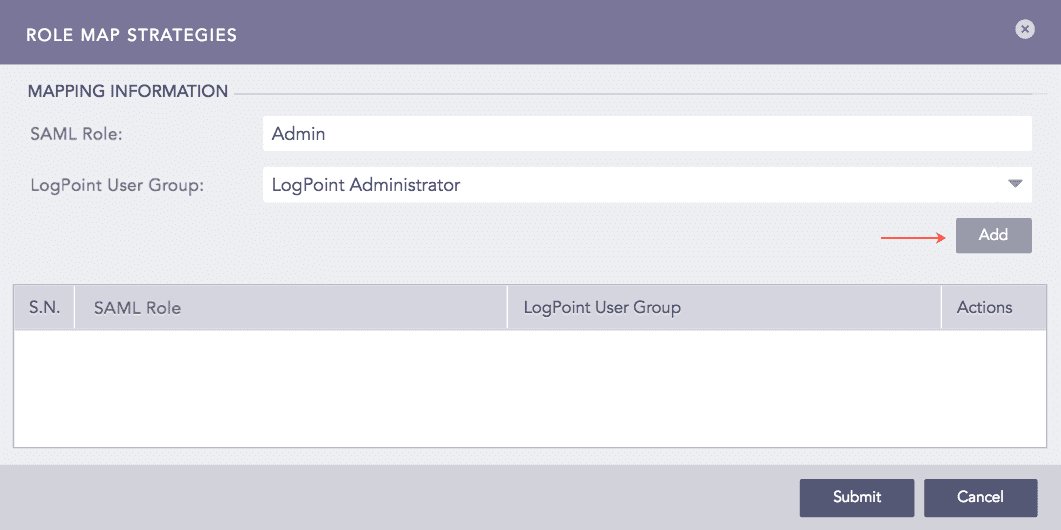
SAML Role Mapping
Click Add.
You can view all the mapped SAML roles and Logpoint user groups in Role Map Strategies. You can either edit or delete them from Actions.
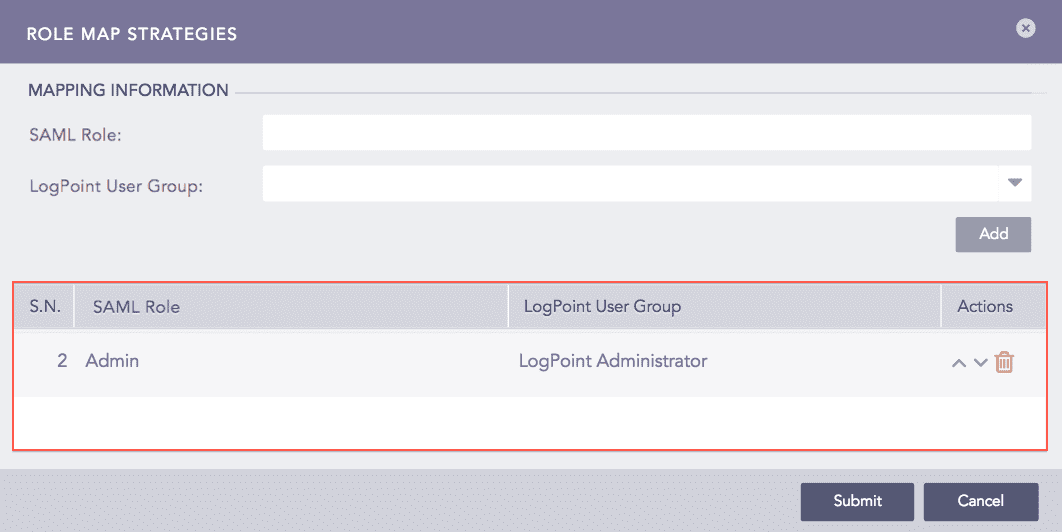
SAML Roles
Click Submit.